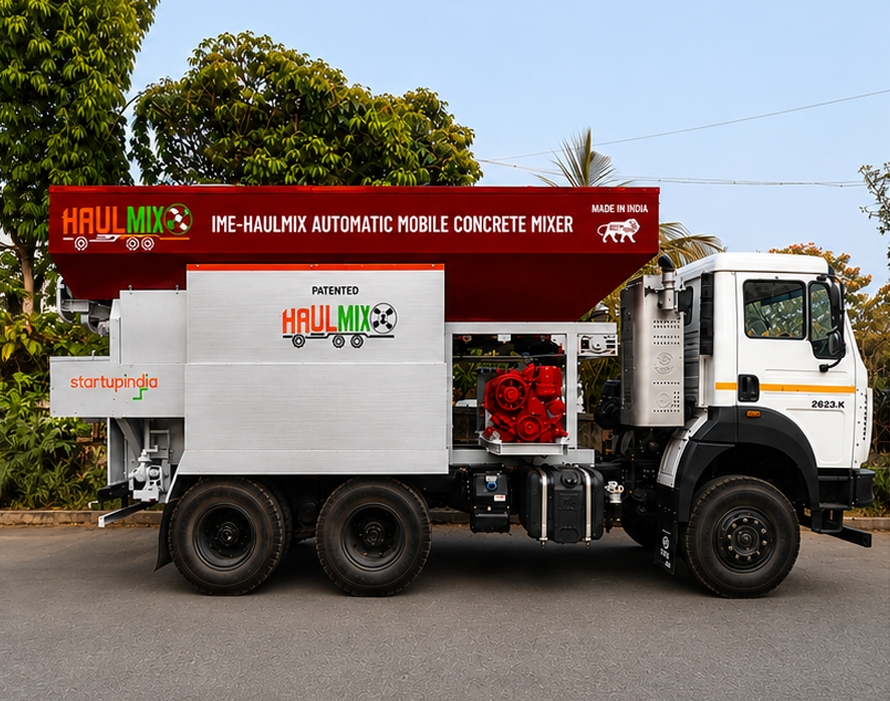
Concrete is the backbone of modern construction, but the way it is produced and delivered can make or break a project’s cost, schedule, and quality. For decades, the default model has been simple: mix concrete at a fixed ready-mix plant, load it into transit mixers, and drive it to the site. This works well in many situations, but it also creates well-known problems—traffic delays, rejected loads, material wastage, and a heavy dependency on logistics.
An automatic mobile concrete mixer offers a different approach. Instead of carrying wet concrete across the city, it carries raw materials—aggregates, cement, water, and admixtures—in separate compartments and produces fresh concrete on site, exactly when the project needs it. This shift from “transporting concrete” to “transporting ingredients and mixing on demand” changes the economics and risk profile of concrete operations in a meaningful way.
From Transit Mixer to Mobile Plant
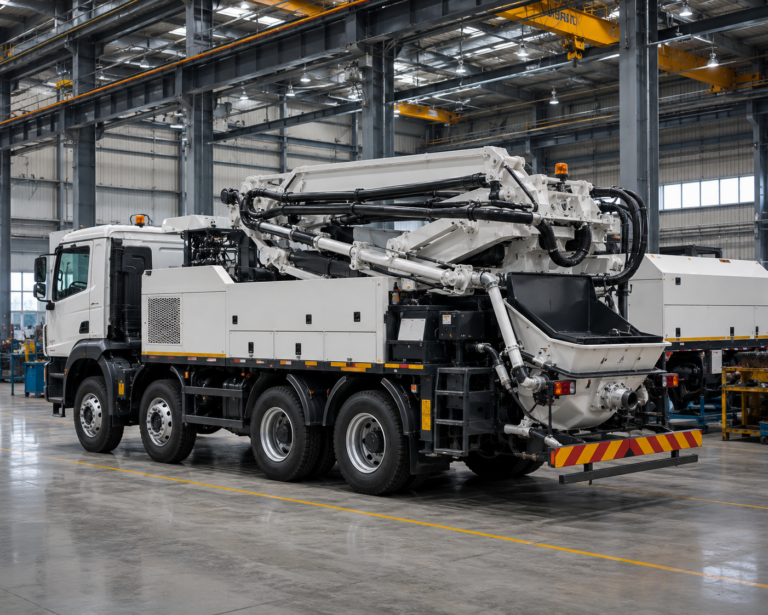
At first glance, an automatic mobile concrete mixer may look like a specialized transit mixer. It is truck-mounted, moves between sites, and discharges concrete through a chute or pump. But under the surface, it functions more like a small, mobile RMC plant.
A traditional transit mixer’s job is to keep already-mixed concrete agitated during transit so that it does not set before reaching the site. The mixing happens at the plant; the truck is essentially a moving container. In contrast, an automatic mobile concrete mixer does not carry wet concrete at all. It carries dry or semi-dry raw materials in separate, sealed compartments. Mixing begins only after the vehicle reaches the work site.
This difference is more than semantic. It directly affects how much control the contractor has over concrete quality, how much material is wasted, and how sensitive the operation is to traffic, weather, and scheduling issues.
How an Automatic Mobile Concrete Mixer Works
The operation of an automatic mobile concrete mixer can be broken down into four key stages: storage, batching, mixing, and discharge.
1. Separate Storage of Raw Materials
During transit, the mixer carries all the ingredients required for concrete:
- Aggregates of different sizes, stored in separate compartments
- Cement, fly ash, or GGBS in sealed silos
- Water in dedicated tanks
- Admixtures in small, controlled dosing units
These compartments are designed to prevent cross-contamination and to keep materials stable during movement. Because water is not mixed with cement and aggregates during transit, the hydration process does not start on the road. This eliminates the risk of concrete aging or setting while stuck in traffic.
2. Weight-Based Batching with Load Cells
Once the mixer reaches the site, the production cycle begins. The operator selects a mix design through a control panel, and the system starts batching ingredients by weight.
Electronic load cells measure the mass of aggregates and binders as they are fed into the mixing chamber. Water and admixtures are dosed precisely, either by weight or by calibrated volume. This weight-based approach is similar to what happens in a stationary RMC plant and is far more accurate than volume-based or guesswork methods.
Accurate batching is critical for concrete strength and durability. Too much water weakens the mix; too little makes it unworkable. Incorrect aggregate proportions affect workability, finish, and structural performance. By using load cells and automated controls, an automatic mobile concrete mixer maintains tight control over these variables.
3. PLC-Controlled Mixing Cycle
After batching, the materials enter a high-speed, high-torque PAN mixer. This is not a simple rotating drum; it is an intensive mixer designed to produce homogeneous concrete in short cycle times.
The entire mixing sequence is managed by a PLC (Programmable Logic Controller). The PLC ensures that:
- Ingredients are charged in the correct order
- Water and admixtures are added at the right stage
- Mixing continues for the required duration before discharge is allowed
This level of automation reduces human error and ensures that every batch follows the same process. Operators do not need to judge mixing time or consistency by eye; the system enforces the parameters defined in the mix design.
4. On-Demand Discharge
Concrete is discharged only after the mixing cycle is complete and all parameters are met. The operator can produce concrete in controlled batches that match the actual placement rate on site.
If the placement slows down, production can be paused. If the crew is ready for more concrete, the next batch can be prepared immediately. This flexibility is especially valuable in projects where pour rates vary throughout the day or where access constraints limit how much concrete can be placed at once.
Why This Matters for Contractors and Developers
The advantages of an automatic mobile concrete mixer become clear when you look at common pain points in concrete operations.
Reduced Risk from Traffic and Delays
In urban and semi-urban areas, traffic congestion is a constant risk. A transit mixer carrying wet concrete can easily exceed the allowable time between mixing and placement. When this happens, the concrete may lose slump, become difficult to place, or even set partially in the drum. In the worst case, the entire load is rejected.
With an automatic mobile concrete mixer, traffic delays do not age the concrete. The vehicle can sit in traffic for an extended period with raw materials on board, and the mixing process will only begin once it reaches the site. This dramatically reduces the risk of rejected loads and the associated costs.
Lower Material Wastage
Rejected loads are only one form of wastage. There is also the concrete that remains in the drum at the end of a pour, the wash-water generated from cleaning transit mixers, and the over-ordering that happens when contractors try to buffer against uncertainty.
Because an automatic mobile concrete mixer produces concrete in controlled batches, it is easier to match production to actual demand. If a pour is finishing and only half a cubic meter is needed, the system can produce just that amount. This precision reduces leftover concrete and wash-water volumes, cutting both material cost and environmental impact.
Better Quality Control
Consistency is a hallmark of good concrete. Variations in water content, aggregate proportions, or mixing time can lead to differences in strength, workability, and finish. In large projects, such variations can trigger additional testing, rework, or even structural concerns.
Weight-based batching, PLC-controlled mixing, and enforced cycle times help ensure that every batch from an automatic mobile concrete mixer is consistent. This does not eliminate the need for quality checks, but it creates a more stable baseline for concrete production.
Operational Flexibility
Not every project is located near an RMC plant. Remote infrastructure sites, linear projects like roads and pipelines, and constrained urban locations can all make traditional RMC logistics difficult or expensive.
An automatic mobile concrete mixer reduces dependency on fixed plants. As long as raw materials can be sourced and brought to the site, concrete can be produced on demand. This flexibility opens up options for contractors working in challenging environments.
Where Automatic Mobile Mixers Fit Best
Automatic mobile concrete mixers are not a one-size-fits-all replacement for every RMC application, but they fit very well in several scenarios.
Infrastructure projects such as roads, bridges, culverts, and irrigation works often have variable demand along the alignment. Some sections may require large pours; others may need small, intermittent batches. Mobile mixers can move along the alignment and produce concrete where and when it is needed.
Remote or constrained sites benefit from the reduced logistics burden. If the nearest RMC plant is hours away, the cost and risk of transporting wet concrete become prohibitive. Mobile mixers allow raw materials to be sourced more flexibly and concrete to be produced locally.
Urban projects with tight access and strict environmental norms also gain from this model. Fewer transit mixers, less wash-water discharge, and more controlled production help meet regulatory and community expectations.
The Bigger Picture: Smarter Concrete Operations
Adopting an automatic mobile concrete mixer is not just about changing equipment; it is about rethinking how concrete is planned and produced. It shifts the focus from “how many transit mixers do we need?” to “how can we align production with actual placement?”
This mindset encourages better coordination between batching, pumping, and placement crews. It promotes more accurate estimation of concrete quantities. It also reduces the temptation to over-order “just in case,” which is a major source of wastage in traditional operations.
For contractors and developers, the result is a more predictable, efficient, and controlled concrete workflow. Projects finish with fewer surprises, lower material losses, and more consistent quality.
Final Thoughts
An automatic mobile concrete mixer is best understood as a mobile, precision concrete plant on wheels. It combines the accuracy of weight-based batching, the reliability of PLC-controlled mixing, and the flexibility of truck-mounted mobility.
For projects where traffic, access, or variable demand make traditional RMC logistics risky or expensive, this technology offers a compelling alternative. It does not eliminate the need for planning or quality control, but it gives teams more control over the factors that most affect cost and performance.
As construction projects become more complex and margins tighter, tools that reduce risk and wastage while improving consistency will only grow in importance. Automatic mobile concrete mixers are a clear example of that trend in action.